

Now what does that mean? In essence, I purposefully go out of my way to find telecommunications infrastructure and or anything that could be used as said infrastructure. No matter where I am in the world, I look for signs of telecommunications infrastructure.
The Story
"Now if you are sitting comfortably, I'll begin …."
This all started from a young age, when I noticed a building for the first time in the town where I grew up. I'd passed it several times; however, I'd never really noticed it (granted it only drew my attention as a van exiting it nearly ran me over), and you could tell from the dirt on the walls, and the moss growing in the car park that it was a building that had been there for some time, however it wasn't used all that much.
It's a funny looking building, with (at the time) a sign next to the door of weird a figure blowing a long horn and next to it. Then on the floor, these 0.5m by 1m sections of light grey/ brown concrete inserted into the pavement with another logo, this time just the letter ‘T’, however the top of the T turned into dots as it extended to the right.
Over the proceeding weeks and months, as I passed this building on a weekly basis, I found myself noticing that it had no house or office like windows. All of the regular square windows had a grill/metal lattice on the inside, and (and the time) the pillar box like ‘slit’ windows above them (just under the roof line) with shatter proof glass (the one with the metal wire running through them). It had a flat roof, and it was dug into the slope of the hill to make sure the building was level.
Then, as per anything that gets your attention, I started to notice these two weird logos on one or two other things around my local and surrounding towns. And then eventually the penny dropped, it was the British Telecom “BT” logo(s):
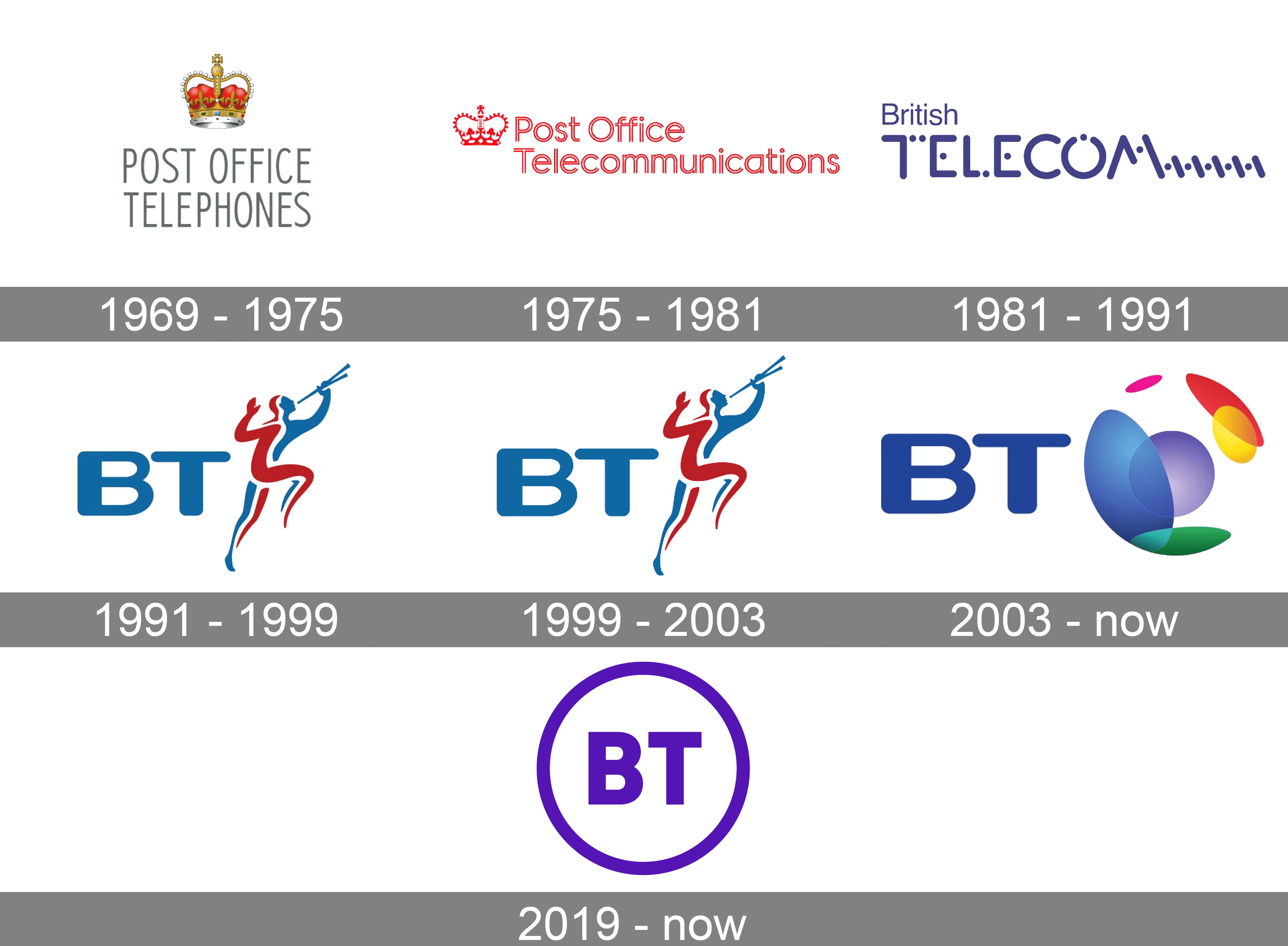
1989-1992 when I first noticed them, to the present day. The logos are the trade mark of British Telecom PLC.
Finally, one day (I think it was a weekend) I jumped onto the small wall around the building and noticed a regular pattern of frames through the windows with hundreds of wires cascading off each one. It was at that moment, I became entranced with what I was looking at
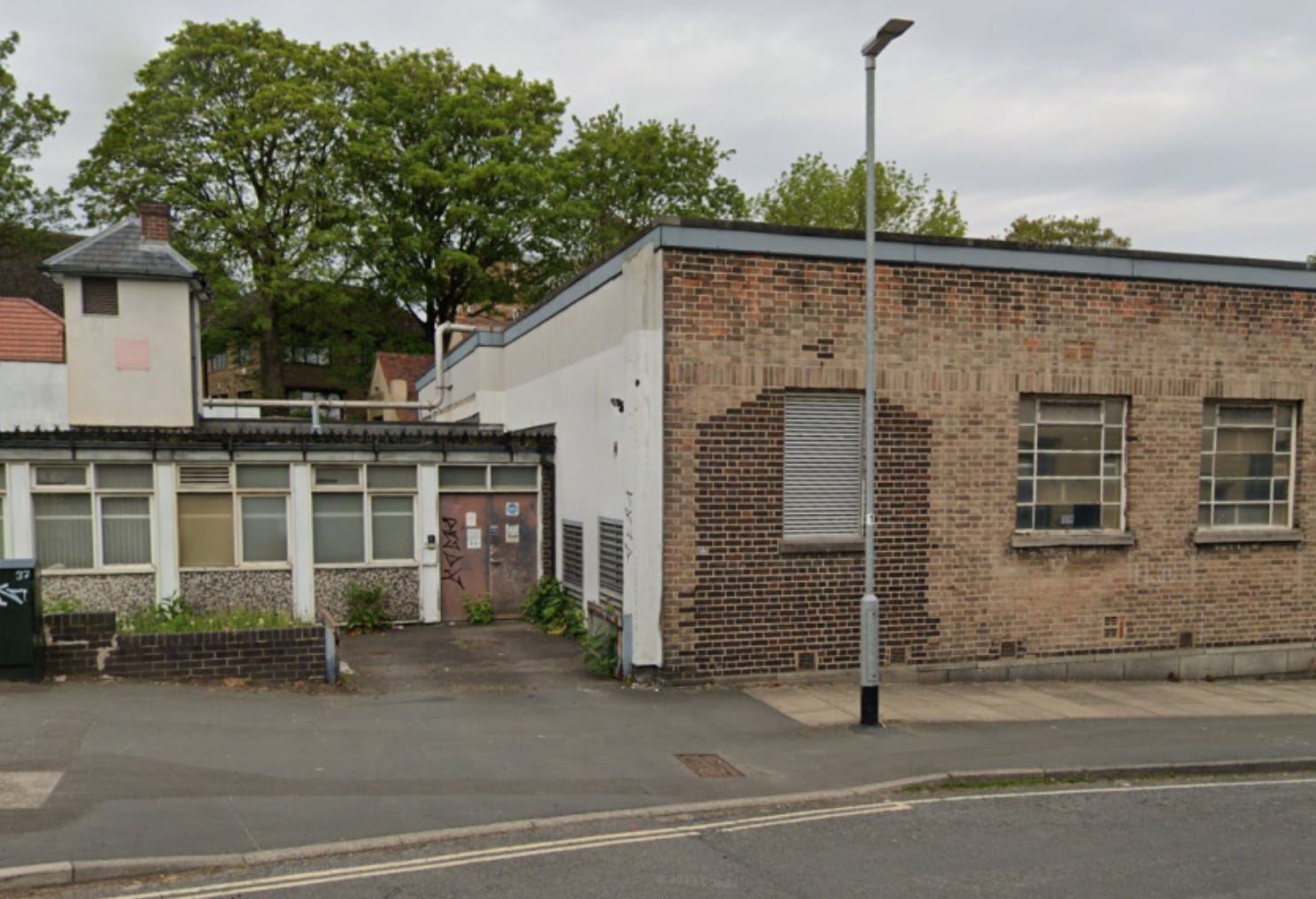
Said BT (now Openreach) telephone exchange
Over the coming years I would begin to understand that the phone line in our house, and my local relatives' houses, my friends' houses all came back to the same telephone exchange, and instead of the traditional switchboard operators I'd seen in old movies, the calls were automatically switched between phone lines to make the connections.
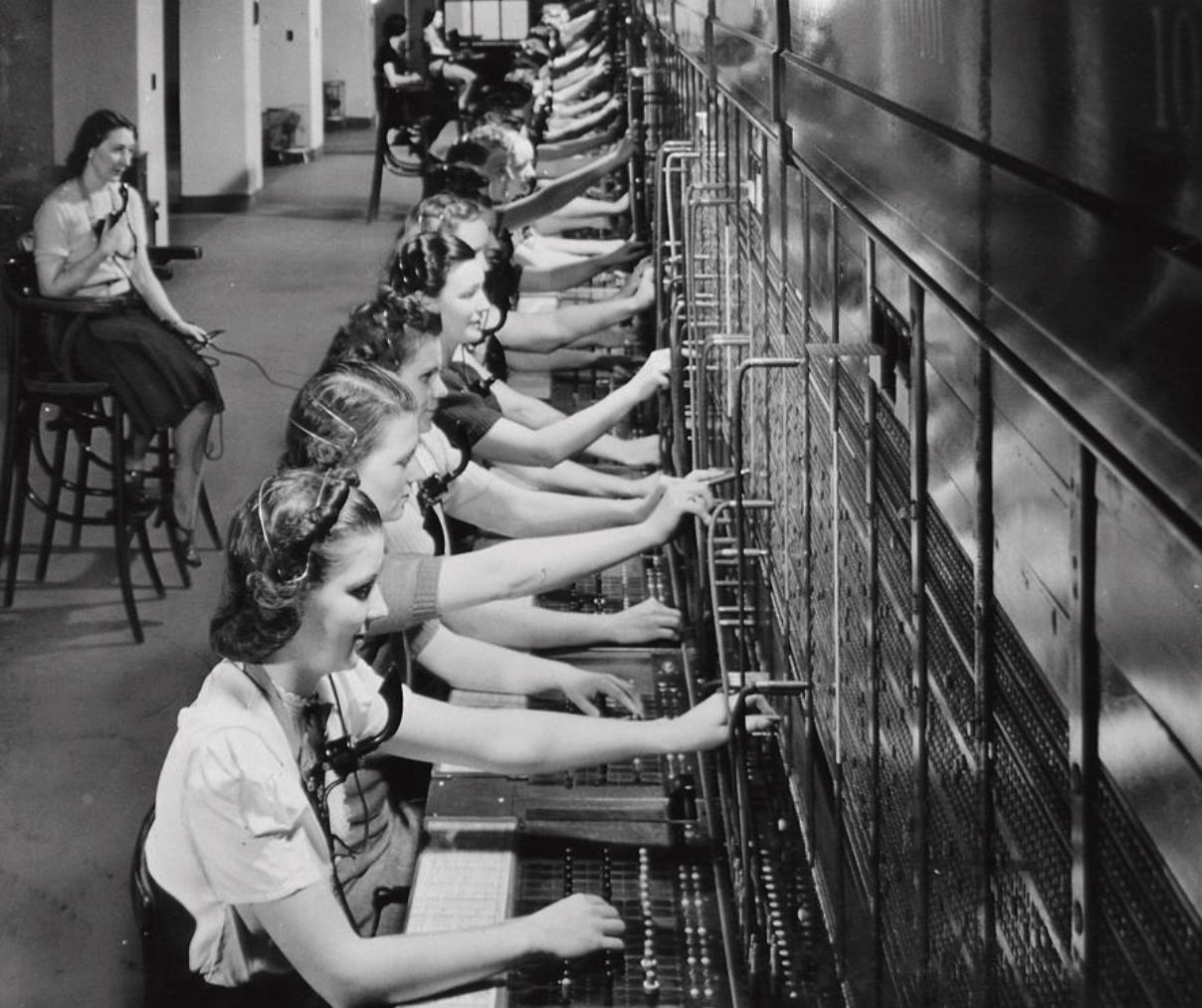
Switchboard operators
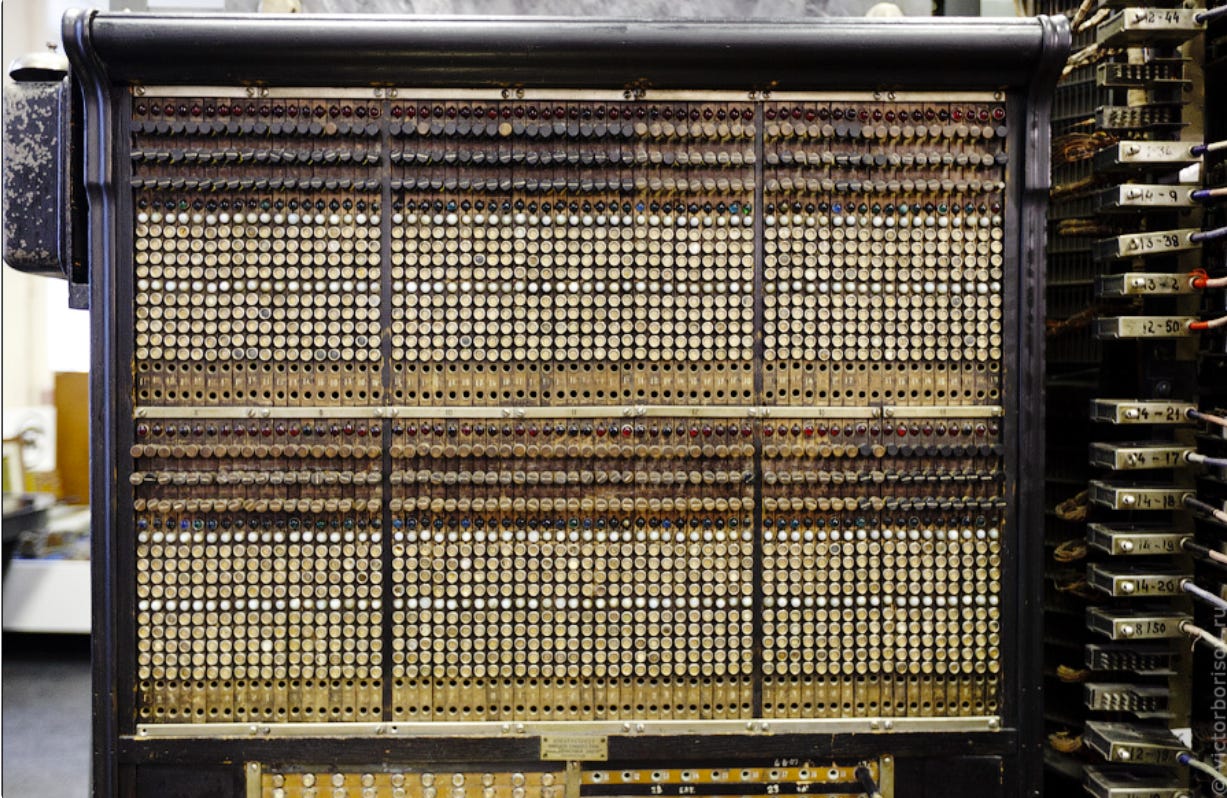
Anolog switch as part of the Public Switching Telephone Network (PSTN)
From that, following all of the ‘tricks’ I got from a 1990's kids ‘spy book’, I ‘investigated’ into how the phone lines travelled between the exchange and peoples houses. And it didn't take long to work out that most of my town was served using drop wires, however other towns (usually cities) didn't have any overhead wiring, there was just lots of holes cut into the floor with lids on them. So how did houses without drop wires get a phone line?
Well, that was answered one day in my teens when I was visiting relatives in Sheffield and one of the pits and adjacent street cabinets was open whilst engineers was working in it. I stopped and asked a few questions, such as “what are those cables?”, “where do they come from, go to … etc.?”, and “do you need a phoneline to get the Internet?”, without missing a beat, the engineer politely answered and my fascination with connectivity bloomed into an obsession with telecommunications.
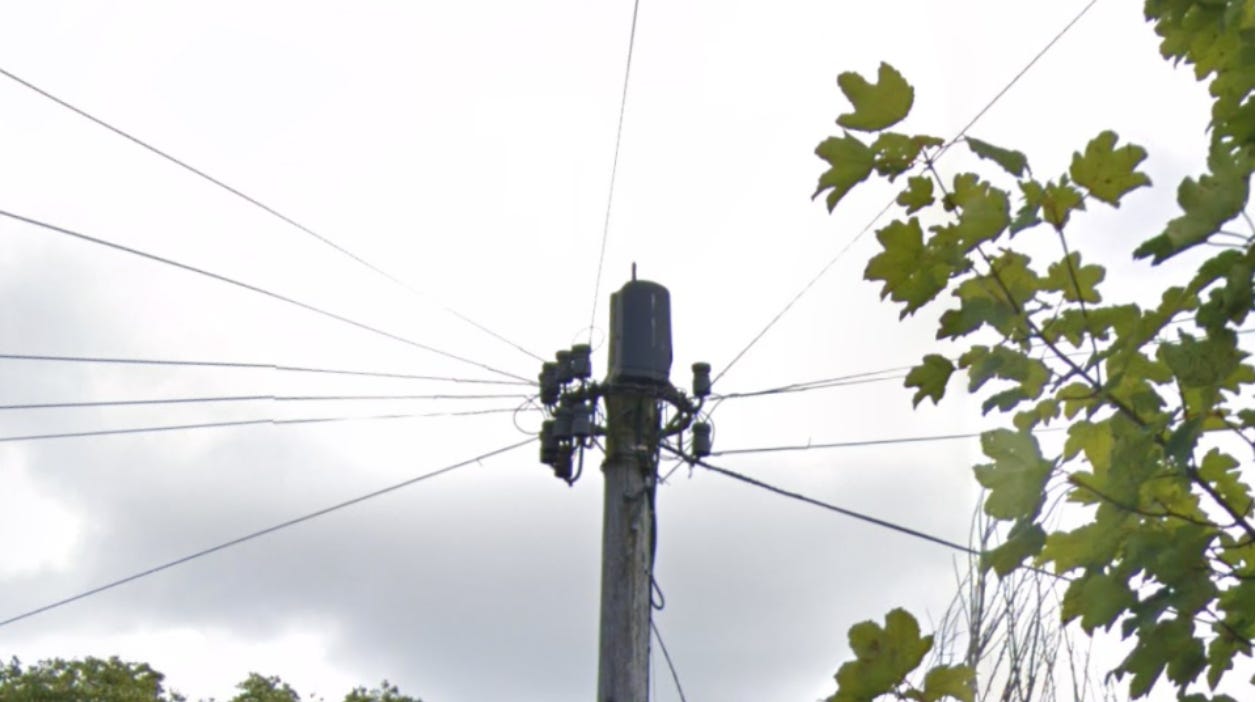
A telephone pole with circa 1950/60's terminals
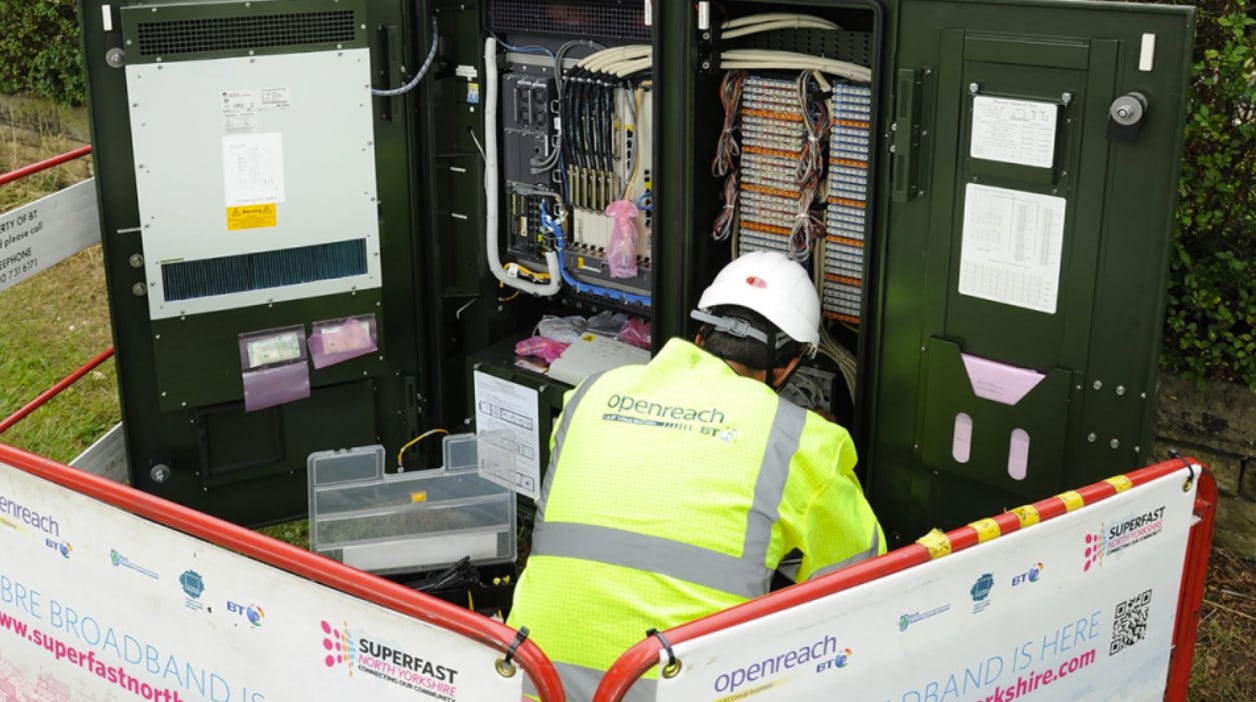
A tidy copper street cabinet, this is not normal and soon to be extinct
Conclusion
So how did all of this turn into walking pit lids? Well, that comes from seeing the UK incumbent being challenged in the late 1990's into 2000's by the emerging cable operators and in large cities I started to notice other pits with different logos, such as NTL, Telewest, Yorkshire Cable … etc.
And since becoming a telecoms professional in the mid-2000's I've be watching the various telecommunications giants pile into London, Birmingham, Manchester, Leeds … etc., and now more recently since circa 2012-2015 the ‘AltNet’ operators start appearing.
Fun Facts
In the UK for PSTN the conduits that carry the telephone lines are sealed, filled with grease and then pressurised. This is to stop moisture/water ingressing into the conduit and eroding the copper cables. The air pressure is inserted by the telephone exchange and can be measured at a street cabinet. If the pressure is below a set threshold, the engineer (whilst we still have copper phone lines) is supposed to report it back to Openreach to get it investigated.
If you live close to a telephone exchange, then there’s a high probability that you’ll be on an ‘exchange only’ line, which means the equipment terminating the connectivity is inside the exchange, rather than in a street cabinet. In the mid-2010’s these were notoriously hard to upgrade from ADSL (~8Mbps) to VDSL (to-up 80 Mbps). I’m not sure how these lines will be converted to fibre, however it’s a fair guess that a new street cabinet will be installed and/ or pit (or a nearby one will be used).
The smallest exchange in the UK is on the remote Shetland Isle of Papa Stour, with just 14 homes.